
JAS23 EDUCATION AND DEVELOPMENT MODEL
Understanding each child’s development
in the context of their own journey.
JAS23 is not a talent selection system that compares children with one another. It is a development model based on observation, play-based experiences, periodic monitoring and open communication with families.
Ages 6–9 · Play-based · Child-centred · Ethical measurement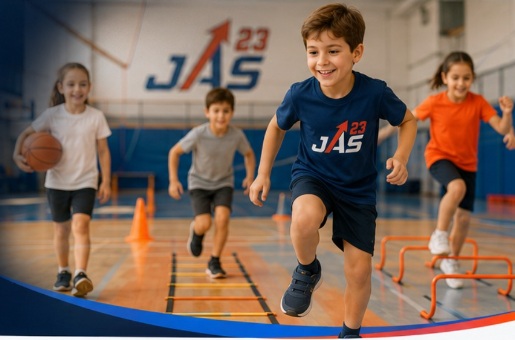
PURPOSE OF THE MODEL
Making the development process visible, not just the result.
The model’s core purpose is to broaden each child’s movement repertoire, support body awareness and help them build a safe, positive relationship with sport.
Data is used to improve educational content in line with each child’s needs, rather than to rank children or select a sport at an early age.
FOUR-STAGE CYCLE
From observation to a development plan.
Observation & Assessment
The child’s age is taken into account as readiness and fundamental movement skills are observed through play.
Experience & Education
Children gain a broad range of experiences through different movement patterns, games and activity stations.
Monitoring & Analysis
Development is tracked over time along each child’s own path.
Reporting & Planning
Families receive clear feedback and recommendations for development in the next term.
DEVELOPMENT AREAS
Not a single skill,
but a broad foundation in movement.
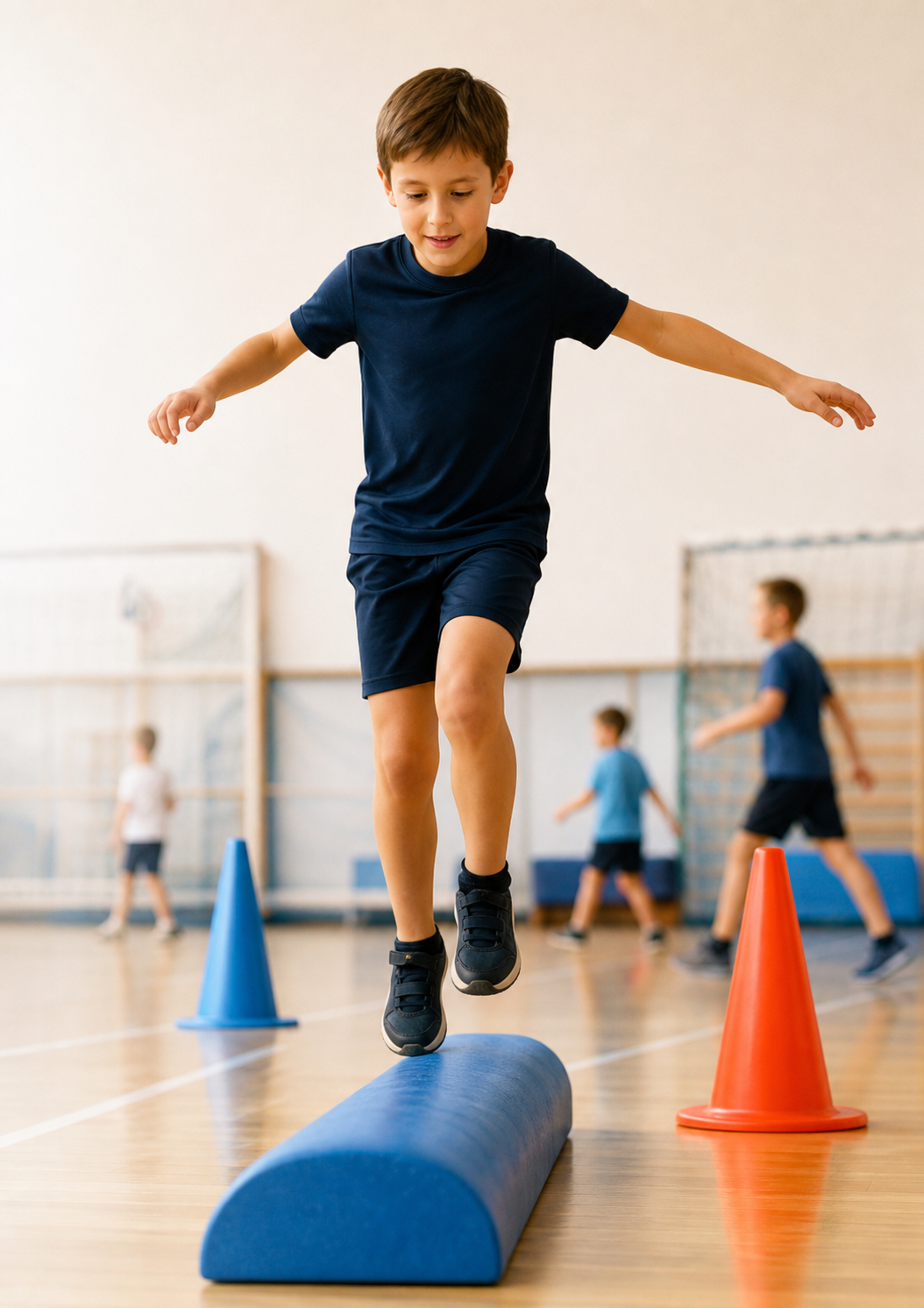
Programmes are structured around a rotation of workshops in which different areas of movement support one another.Balance and body control
Coordination
Running and changing direction
Jumping and landing
Ball and object control
Rhythm and reaction
Decision-making during play
Social participation
SAMPLE TERM SCHEDULE
A different question about movement each week.
- Weeks 1–2 Getting to know one another, free play and initial observation
- Weeks 3–5 Balance, coordination and fundamental movement stations
- Weeks 6–8 Ball control, rhythm, reaction and games
- Weeks 9–10 Periodic assessment and family feedback
OPEN COMMUNICATION WITH FAMILIES
A report is not a scorecard.
Each periodic JAS23 report uses clear language to describe the child’s strengths, observed progress, areas that could benefit from support and suggestions for movement activities at home.- Explanations based on observation
- Age-appropriate developmental indicators
- Notes and recommendations from educators
- Goals for the next term

ETHICAL BOUNDARIES
Measurement is not labelling.
No comparisons
Children are not ranked. They are assessed only in the context of their own developmental journey.
No early sport selection
A sport is not recommended for a child on the basis of a single measurement or observation.
Privacy is essential
Only the minimum data required for educational purposes is used and shared with the family.
No genetic testing requirement
Genetic testing is not mandatory at any stage of participation in JAS23 programmes.
JAS23 DEVELOPMENT JOURNEY
Learn more about JAS23 for your child.
JAS23 EDUCATION AND DEVELOPMENT MODEL
Understanding each child’s development
in the context of their own journey.
JAS23 is not a talent selection system that compares children with one another. It is a development model based on observation, play-based experiences, periodic monitoring and open communication with families.Ages 6–9 · Play-based · Child-centred · Ethical measurementPURPOSE OF THE MODEL
Making the development process visible, not just the result.
The model’s core purpose is to broaden each child’s movement repertoire, support body awareness and help them build a safe, positive relationship with sport.
Data is used to improve educational content in line with each child’s needs, rather than to rank children or select a sport at an early age.
FOUR-STAGE CYCLE
From observation to a development plan.
Observation & Assessment
The child’s age is taken into account as readiness and fundamental movement skills are observed through play.
Experience & Education
Children gain a broad range of experiences through different movement patterns, games and activity stations.
Monitoring & Analysis
Development is tracked over time along each child’s own path.
Reporting & Planning
Families receive clear feedback and recommendations for development in the next term.
DEVELOPMENT AREAS
Not a single skill,
but a broad foundation in movement.
Programmes are structured around a rotation of workshops in which different areas of movement support one another.Balance and body control
Coordination
Running and changing direction
Jumping and landing
Ball and object control
Rhythm and reaction
Decision-making during play
Social participation
SAMPLE TERM SCHEDULE
A different question about movement each week.
- Weeks 1–2 Getting to know one another, free play and initial observation
- Weeks 3–5 Balance, coordination and fundamental movement stations
- Weeks 6–8 Ball control, rhythm, reaction and games
- Weeks 9–10 Periodic assessment and family feedback
OPEN COMMUNICATION WITH FAMILIES
A report is not a scorecard.
Each periodic JAS23 report uses clear language to describe the child’s strengths, observed progress, areas that could benefit from support and suggestions for movement activities at home.- Explanations based on observation
- Age-appropriate developmental indicators
- Notes and recommendations from educators
- Goals for the next term
ETHICAL BOUNDARIES
Measurement is not labelling.
No comparisons
Children are not ranked. They are assessed only in the context of their own developmental journey.
No early sport selection
A sport is not recommended for a child on the basis of a single measurement or observation.
Privacy is essential
Only the minimum data required for educational purposes is used and shared with the family.
No genetic testing requirement
Genetic testing is not mandatory at any stage of participation in JAS23 programmes.
JAS23 DEVELOPMENT JOURNEY